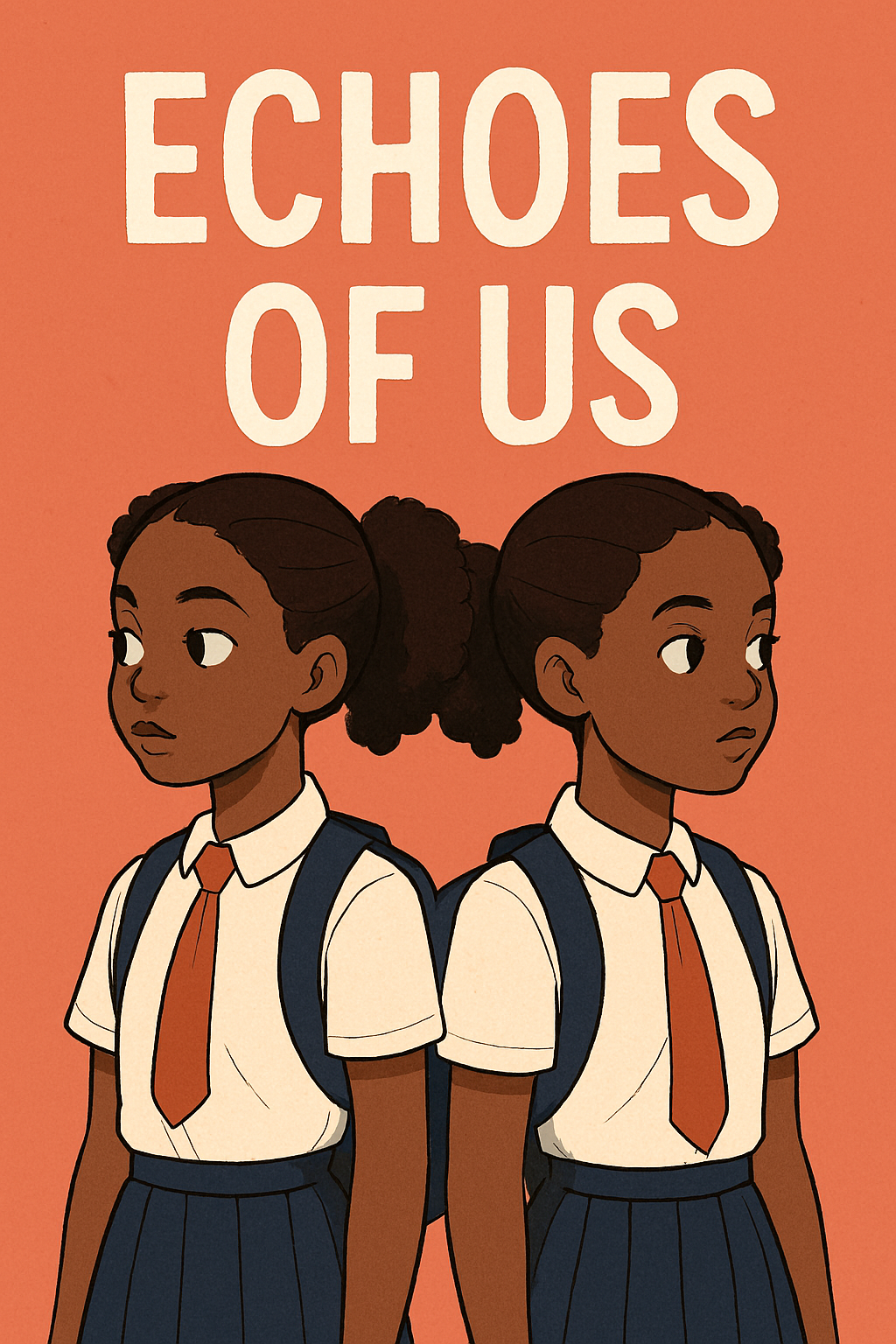
ECHOES OF US
Chapter 4: The Breaking Point
The school was buzzing with excitement over the upcoming Cultural Day—a tradition filled with vibrant attire, food stalls, music, and student performances. For years, Amara and Awele had always participated together, dressing in matching wrappers and performing the same dance routines. They were always a crowd favorite.
But this year was different.
This year, Amara was representing her class in the debate segment. She had spent weeks preparing and Awele, on the other hand, had joined the dance team with Simi and Glory. She didn’t care much for debates. She wanted the stage and the music.
The day arrived with drums and color. The field was covered in canopies, the scent of jollof rice and puff-puff wafting through the air. Students moved around in traditional attire, faces painted, spirits high.
Their parents came too, sitting among the other guests. Their mother wore a soft pink gele, her smile proud but uncertain.
Amara’s debate was first. She stepped forward in a simple Ankara dress, poise and confidence dripping from her every word. She spoke about education reform. Her voice was clear, calm, steady—unshaken even when her opponent tried to interrupt.
She won, of course.
The applause was thunderous.
Her father clapped the hardest.
An hour later, it was time for the dance.
Awele stepped onto the stage in a beaded blouse and fitted skirt, her waist tied with a shimmering sash. The music hit—and she moved. Fluid, expressive, alive.
The crowd roared. The rhythm seemed to live in her body. Her laughter mid-spin was real, free.
But somewhere in the crowd, Amara watched without clapping. Her arms were folded. Her jaw tight.
And Awele saw her.
Their eyes locked just for a second but it was enough to make Awele falter, as it planted the seed of doubt in the soil of her triumph.
At home, the tension spilled over.
“You looked happy,” Amara said as they entered the room that night, her voice unreadable.
“I was happy,” Awele shot back. “You could try it sometime.”
Amara dropped her bag, shoulders rigid. “It’s not about being happy, Awele. Life isn’t a party.”
“No, but it isn’t a test either!” Awele snapped. “Everything with you is books and grades and scholarships. Do you even know how to breathe?”
“I breathe just fine. While you’re out there wasting time and your future.”
That did it.
Awele’s voice cracked. “You don’t get to judge me, Amara. You think you’re better than everyone because you have your life mapped out? You don’t even *see* me anymore. I’m not your shadow!”
“You never were,” Amara said quietly. “You were my sister. But you left.”
The silence that followed was different this time.
Not just tense.
Final.
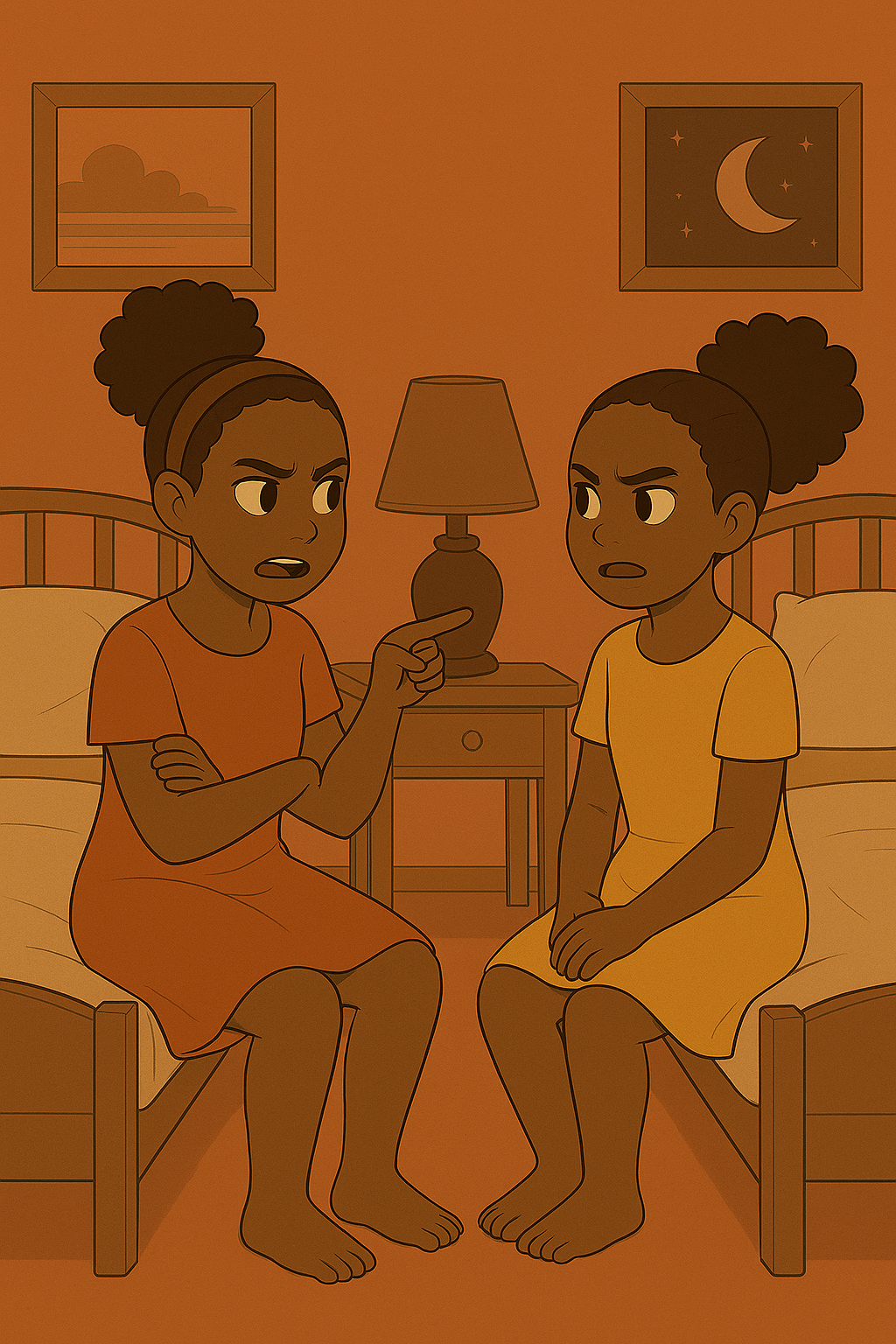
Awele turned away, blinking back tears. Amara sat on the edge of the bed, her hands trembling in her lap.
They were still in the same room. Still under the same roof.
But that night, it truly felt like they were living in different worlds.
Question
1. What role did Awele play during the school’s Cultural Day celebration?
2. How did Amara perform during the debate?
3. What caused Awele sudden self-doubt?
4. Describe the argument between Amara and Awele at home.
5. What were the main things the twins accused each other of?