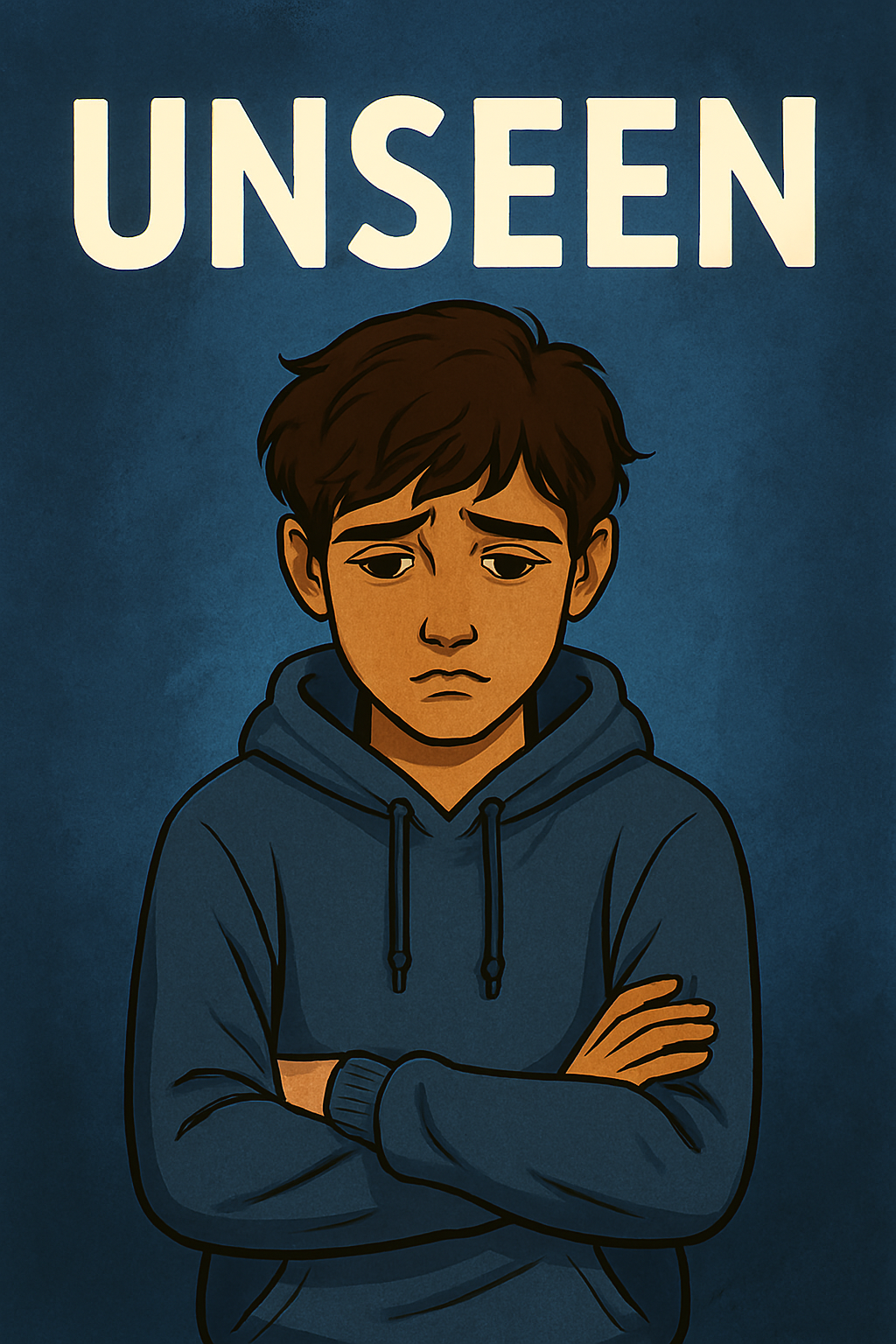
UNSEEN
Chapter 1: Shadows of Origin
Mark entered the world through sorrow.
The midwives whispered among themselves as they cleaned the newborn, their hushed voices carrying the weight of tragedy. His mother, weak and exhausted from labour, had barely glimpsed his tiny face before her breath faded into silence. Outside the small clinic, the sky was dark, as if the heavens knew that grief had arrived alongside life.
His father, Chief Obiora, was a strong man, but on that day, he was broken. He held his son in trembling arms, staring into the innocent eyes that did not yet understand the cost of his birth. The village elders consoled him, telling him to focus on the child, that the boy would bring him joy in time. But Chief Obiora barely heard them. How could he celebrate life when death had claimed the woman he loved?
Mark grew up without a mother, but his father tried to make up for the absence. Chief Obiora was a respected trader, known for his integrity and wisdom. He never let wealth blind him, and though he had many workers, he insisted on keeping a close watch over his business. Despite his responsibilities, he made sure Mark never felt neglected.
Even as a toddler, Mark sensed his father’s sadness. There were moments when Chief Obiora would stare at his late wife’s photograph, lost in thoughts, running a finger over the edges of the frame as though touching her face. Mark would approach him, tugging at his sleeve, bringing him back to the present. His father would force a smile, pick up his son, and whisper, “You are my strength, Mark.”
It was a bond built on love and loss.
Life took its turn when Mark was four.
His father met Madam Eno at a cultural event in Lagos. She was charming, elegant, and spoke with an intelligence that intrigued him. The villagers whispered about the relationship, many advising him against marrying again so soon. But Chief Obiora wanted stability for Mark. A child needed a mother, and Eno seemed eager to take on the role.
For a short while, the house was filled with warmth.
Eno played the part well—she greeted Mark with affectionate words, cooked special meals, and made sure the house was always tidy. At first, Mark thought this was what having a mother felt like. He let himself believe it.
But Madam Eno’s mask began to slip.
She never truly loved Mark—he was a reminder that she was not his first mother, that she had stepped into a life already formed, never fully hers. She expected Chief Obiora to have more children with her, to create a family that was fully their own. But the years passed, and no pregnancy came.
Her frustration grew, but she masked it well until Chief Obiora fell ill.
Mark was six when his father collapsed in his shop. The workers rushed to get help, and Madam Eno stayed by his side, but the illness was stronger than their prayers. The doctor spoke of complications, of failed treatments, of no possible cure. In less than six months, Chief Obiora was gone.
Mark stood in front of the grave, staring at the sand that covered the only parent he had. He understood what death meant now—it meant that he was alone.
The village mourned, the workers wept, but Mark did not cry. His heart carried too much pain to let the tears fall.
Madam Eno, dressed in mourning attire, said the right words at the funeral, accepted condolences, and even placed a protective arm around Mark’s shoulders. But behind closed doors, she had changed.
Her voice became sharper. The house that had once carried laughter now held only silence. And for the first time in his young life, Mark began to understand that love was never guaranteed.